FROM LAND TO TOFU: THE ARTISAN TICINO SOY SUPPLY CHAIN
An example of sustainability and innovation that challenges prejudices and is changing eating habits, from schools to nursing homes.
Article written by Alice Tognacci
Watch the full video here:

The artisanal Ticino soy supply chain
RSI Food 10/15/2025, 5:12 PM
Hands, earth, Ticino: the good from here
This feature is part of the series "Hands, Land, Ticino. The Good Things Here," produced by RSI Food in collaboration with Ticino a Te—a project coordinated by the Ticino Agri-food Competence Center (CCAT), a non-profit organization—and the Agriculture Section of the Economics Division.
Each month, through videos and insights, we showcase the Canton's agricultural and food production, with an informative and engaging approach. Each episode highlights a local supply chain through the voice of a speaker who serves as a spokesperson for collective knowledge, with the aim of debunking myths, supporting artisanal work, and highlighting the true "goodness of this place."
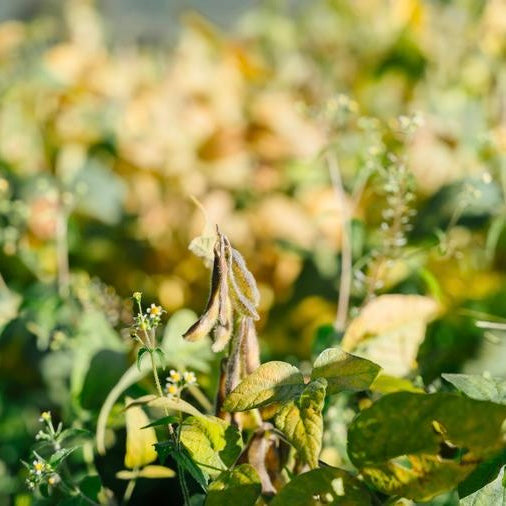
In Ticino, October isn't just synonymous with chestnuts and the grape harvest: it's also time for the soybean harvest. Surprisingly, this crop has been native to our region for decades. Soybeans, therefore, don't come from distant regions, but find ideal conditions on the Magadino Plain for growth and soil regeneration.
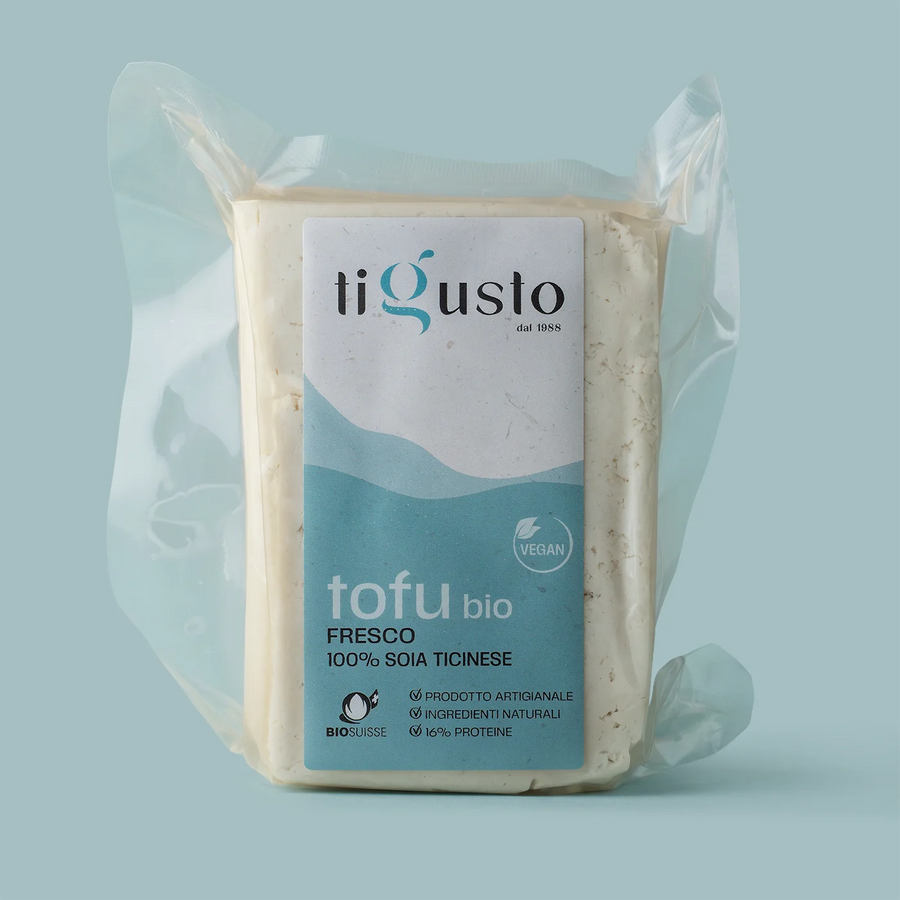
"Ticino soy is sown in two stages, and the second sowing is harvested in October," explains Pablo Wydler, owner of the TiGusto company in Gerra Piano, the only company in Ticino that processes 100% organic and local soy into tofu and other plant-based specialties.
Soy has existed in Ticino for decades, but only in recent years has a completely organic supply chain developed, one that complies with Swiss regulations: no GMOs, no pesticides, and attention to crop rotation. As Pablo explains, "It's a plant that enriches the soil with nitrogen and is also beneficial to the farmers who grow it."

Pablo Wydler and the legacy of Pierluigi Zanchi. It all began in 1988, when Pierluigi Zanchi, a leading figure in the world of agriculture and organic products in Ticino, founded a small workshop in Muralto. His was a pioneering idea: producing tofu, tempeh, seitan, and other plant-based products with an artisanal and sustainable approach, well before these products became mainstream. In 2002, the business moved to Gerra Piano. Zanchi continued to develop production while maintaining a strong commitment to his vision: regional raw materials, a clean supply chain, and environmental commitment. In 2025, with his retirement, Pablo Wydler, a trained chef with experience in Switzerland and abroad, took over. A generational transition that occurred almost by natural affinity: "It was love at first sight. I felt that the business Pierluigi created embodied values I deeply believed in," says Pablo. Today, the company continues along that same path, with new impetus but with the same artisanal heart: one that binds two generations through a shared vision of conscious, local, and sustainable nutrition.

Soybean cultivation in Switzerland
Approximately 3,300 hectares of soybeans are cultivated in Switzerland, with a total production of approximately 4,000 tons. Currently, Swiss soy production covers less than 1% of domestic demand, and many crops (about half of total production) are grown for fodder or animal feed.
Most of the soybean areas are located in the Swiss Mittelland, particularly in the cantons of Vaud and Geneva, which together cover almost 59% of the national areas dedicated to soybean in 2023.
In addition to Ticino, in the canton of Bern—particularly in the Seeland region—there are farms that grow organic soy for human consumption. A concrete example is the Garohof farm, which has been growing organic food-grade soy since at least 2016.
Although the soybean plant has a modest yield and sometimes challenging climatic conditions, it is appreciated that soybeans:
- does not require chemical fertilizers (being able to fix nitrogen),
- it is resistant (at least so far) to parasites in Swiss environments,
- it can be inserted into agricultural cycles with rotations, helping soil health.
How is tofu made?
From locally grown soybeans comes a food that remains a mystery to many, but which is actually produced through a process surprisingly similar to that of cheese.
It all begins with the soybean, which is soaked for at least twelve hours until it absorbs water and softens. It is then finely ground—to a puree—and cooked with water, resulting in soy milk. This process is closely related to cheesemaking.
Soy milk is filtered and then "curdled" with nigari, a natural coagulant extracted from sea salt. Similar to what happens with animal milk and rennet, the liquid separates into a solid portion—the tofu flakes—which are then collected, filtered, and pressed to form the classic block we find on the market.
A seemingly simple process, because each step requires attention, sensitivity, and knowledge of the raw materials. And, as Pablo Wydler emphasizes, the process remains artisanal: each step is performed by hand, in a balance of technique and intuition, making each batch slightly different and each loaf, in a certain sense, unique.
An ingredient for all kitchens
Despite prejudices and skeptics, tofu isn't just for vegans or vegetarians. "In Asia, it's often cooked with meat or fish. Its neutral flavor is an opportunity: it absorbs marinades perfectly and adapts to many recipes." That's why Pablo, through his business, promotes tofu in school cafeterias, hospitals, and retirement homes; he organizes cooking classes and develops new recipes to demonstrate how versatile, healthy, and sustainable it can be, and how it can be incorporated into even the most traditional and local cuisines.
«The elderly have a bit more difficulty because tofu has never been part of their culture, but I believe that by raising awareness among schools and young people, demand will grow».
Tofu is often criticized for being a bit bland, but this is actually also its advantage: in the kitchen it has a very interesting versatility, it can be marinated and given the desired flavor.
Among the culinary uses he suggests, he suggests serving tofu in tomato sauce to give it a more Mediterranean flavor, or seasoning it with soy sauce or other more oriental sauces to give it character. He also emphasizes that tofu can also be used as a filling for stuffed pasta or to create unusual desserts! From appetizers to desserts, tofu can find a place on our tables.
Article written by Alice Tognacci
Photos and videos by Alessia Rauseo

Written by Pablo Wydler