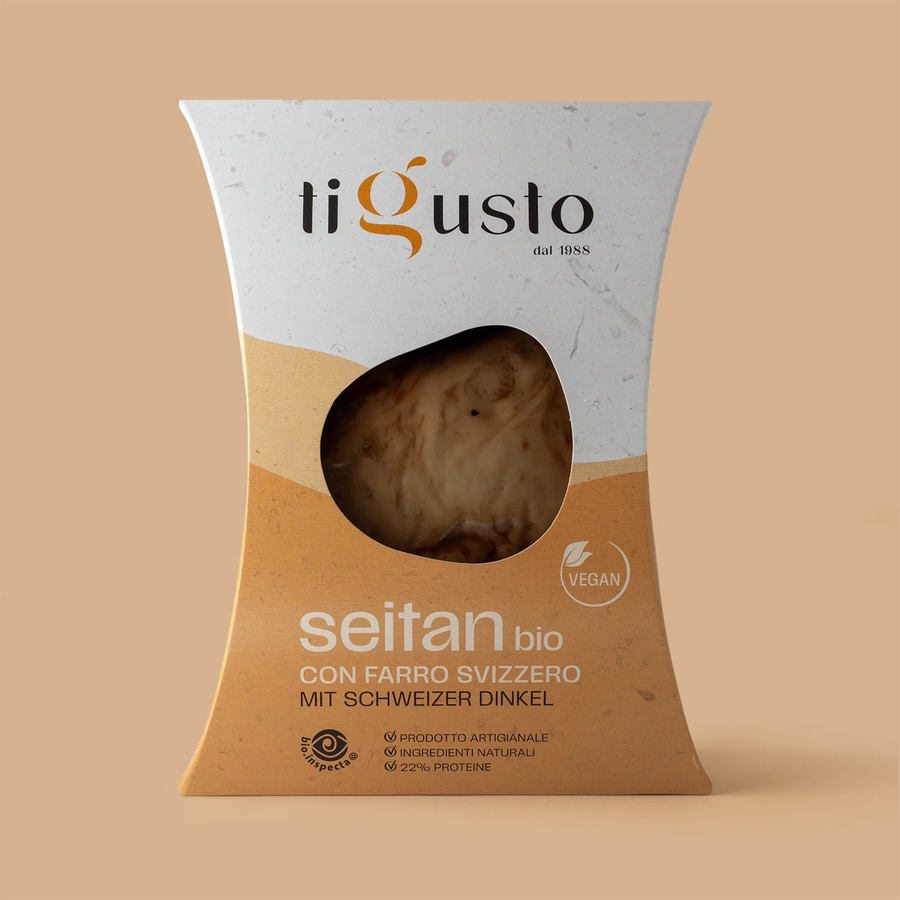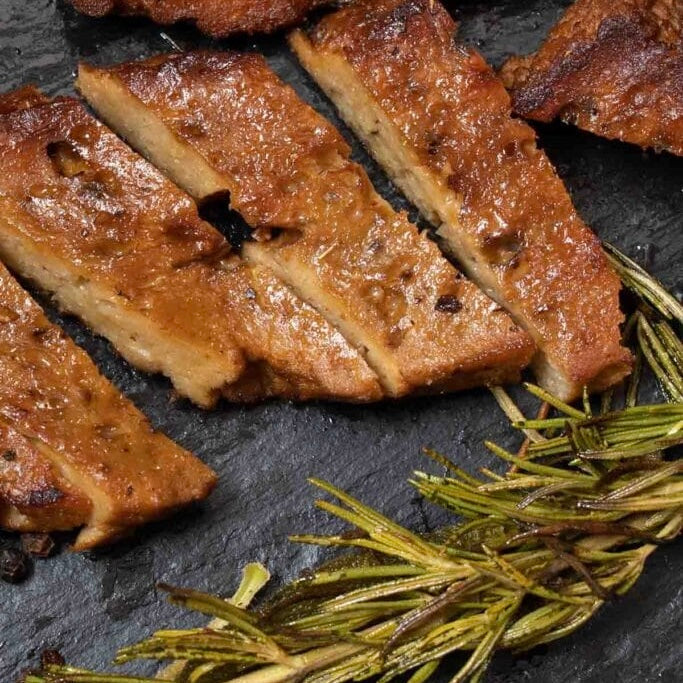
What is seitan, exactly? Short answer: wheat protein. The longer answer is worth a few minutes.
When you knead wheat flour with water and wash away the starch, what remains is gluten — a dense, elastic protein network. Cook it in broth, and it develops a texture that's genuinely close to meat. Japanese kitchens have been working with it for centuries. They called it "wheat meat." That name still holds up.
At our lab in Cugnasco-Gerra, in the canton of Ticino, we start with certified organic wheat flour. The process requires attention, precise timing, and experience. The result is an organic seitan with a fibrous, satisfyingly dense texture — one that can be sliced, grilled, braised, or marinated without losing its character. It's not tofu. It's not tempeh. Seitan has its own identity.
Seitan protein: the numbers worth knowing
For anyone looking for a substantial plant-based protein source, seitan is probably the most straightforward option available. At around 25 grams of protein per 100 grams, it holds its own against chicken or beef without any difficulty. For athletes optimising their intake, or for flexitarians looking to genuinely vary their diet, those numbers make a strong case.
It also contains iron, selenium, phosphorus, and calcium. Fat content sits below 2% per 100g, and caloric intake comes in at roughly 120–150 kcal per serving depending on preparation. It's fully plant based, contains no soy — which matters for people with soy allergies or preferences — and fits naturally into a vegetarian or simply more considered diet.
One important note: seitan is not suitable for people with coeliac disease or gluten sensitivity. It is made of gluten. That's the whole point.
Seitan recipes: what you can actually do with it
Versatility is usually what surprises people most when they try it for the first time. Tigusto organic seitan absorbs flavours deeply — which makes it remarkably adaptable across cooking styles.
Some practical ideas:
- Grilled seitan with herbs. Sliced thick, marinated with rosemary, olive oil and a splash of balsamic vinegar, then grilled. Ten minutes, and the result tends to win over sceptics.
- Winter stew. Cut into cubes, browned with onion and celery, then slow-cooked with red wine and tomato. The texture holds through long cooking without falling apart — a genuine advantage over many other plant proteins.
- Fajitas or wraps. Cut into strips and cooked quickly at high heat, seitan performs exceptionally well with peppers, onion, and cumin.
- Plant-based ragù. Roughly chopped, sautéed with vegetables, then simmered in tomato sauce. People who try it without knowing what's in the pan rarely guess correctly.
- Smoked seitan in salads. Thinly sliced and briefly toasted in a pan, it becomes an interesting topping — particularly in winter salads with walnuts and pomegranate.
Organic seitan to buy online — why Tigusto
The market is full of seitan. Supermarket shelves with industrial products, imported goods moving across half of Europe — finding something isn't hard.
What's harder to find is seitan made a few kilometres from home, with certified organic ingredients, by people who put their name on the label.
Tigusto seitan is made in the canton of Ticino. It's not a niche product for a specific lifestyle — it's a quality protein, made with care, for anyone who wants to eat well without having to choose between flavour and the integrity of the ingredients.
Organic seitan is available to buy online directly from our website. We deliver across Switzerland.
Explore the recipes on our website — or order online and try it for yourself.

Written by Pablo Wydler